
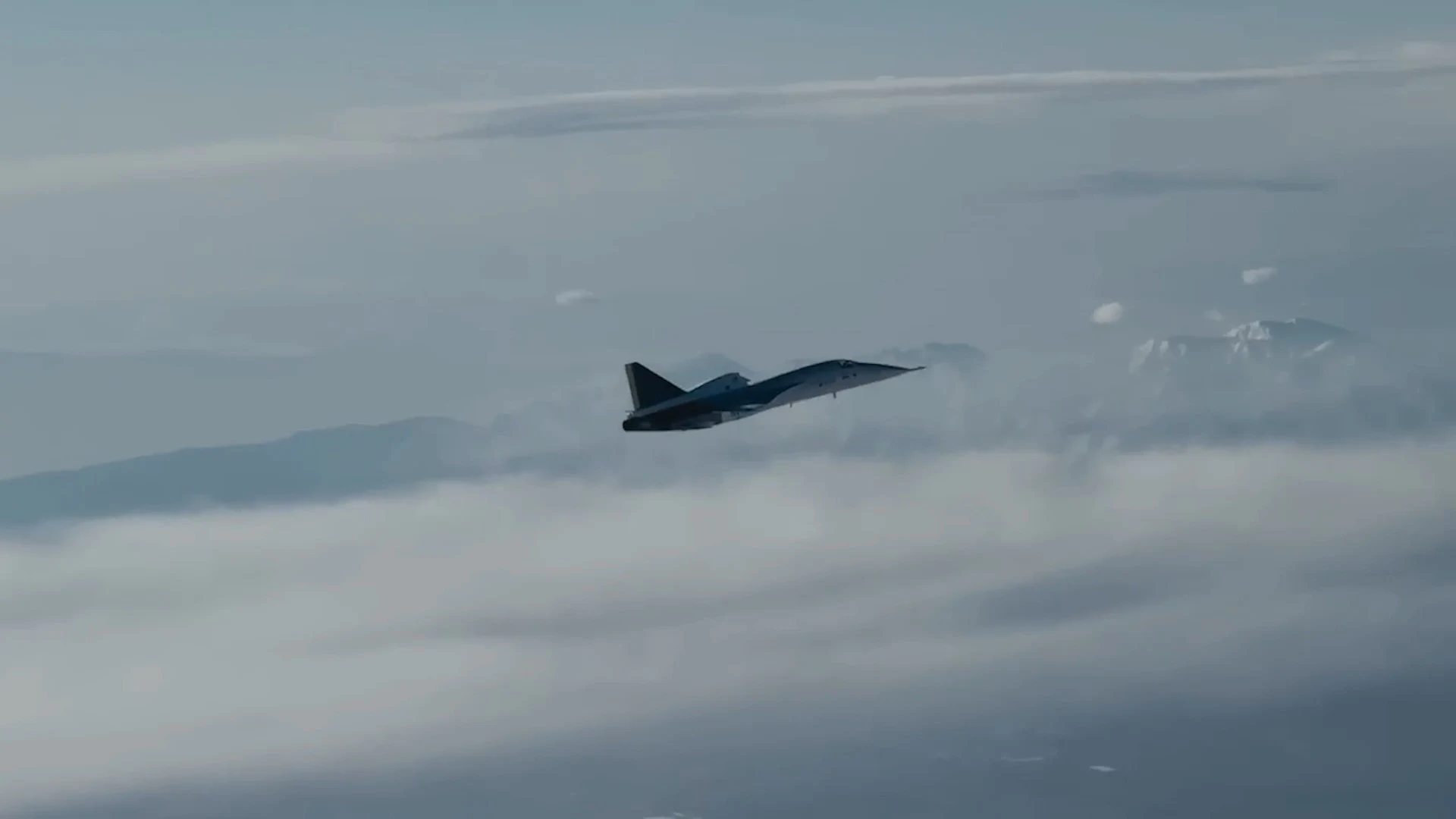
The Boom Prize
Break the Sound Barrier.
From Your Garage.
$750,000 cash and $50,000 in Boom stock for the first amateur team whose remotely piloted, air-breathing airplane exceeds Mach 1 in level flight — lands — and does it again the same day.
The prize in three figures
- Mach 1 The Target
- ×2 Flights in one day
- $800k The prize - and growing
Why
Prizes
built aviation.
The $25,000 Orteig Prize put Lindbergh across the Atlantic and ignited the airline age. The Kremer Prize produced human-powered flight. The Ansari XPRIZE opened private spaceflight. In 2025, XB-1 became the first independently developed jet to go supersonic. Now it's your turn: no radio-controlled airplane has ever flown supersonic under air-breathing power. The people who close that gap will teach the world something about small, fast, affordable supersonic flight. So we're putting up a prize.
How to win
Four requirements.
One day.
A winning attempt is two flights, sunrise to sunset of a single calendar day, witnessed by the judging panel. When you're ready to prove it, tell us — we'll coordinate a date and venue with you.
01
Break the barrier — level
True airspeed above the local speed of sound, sustained 5+ continuous seconds. The entire acceleration through the transonic regime — Mach 0.8 to past Mach 1 — must be flown level or climbing, with no altitude loss. Thrust, not gravity: a dive to accelerate doesn't qualify.
02
Air-breathing power
Flight must be powered. Turbojet, turbofan, ramjet, or pulsejet — any combination, including turbojet-boosted ramjets. Unpowered flight does not qualify: gliders and soaring aircraft, including dynamic-soaring designs, are not eligible. No rocket thrust at any point in flight. No onboard oxidizer.
03
Land intact
A controlled landing appropriate to the design — wheeled or belly, on the designated area — after which the aircraft can fly again without replacing major components.
04
Do it again
Same airframe, same day, reciprocal heading. Refuel and make minor repairs — but the wings, fuselage, engine, and flight computer that went supersonic in the morning must fly again in the afternoon.
The aircraft
Small plane.
Real airplane.
This is a flying-machine challenge, not a projectile contest. The same vehicle must take off, go supersonic, land, and repeat. Automation is welcome — but a human remote pilot holds continuous command and instant abort authority on every flight.
- Max takeoff weight
- 25 kg / 55 lb, including fuel
- Configuration
- Fixed-wing airplane; lift from aerodynamic surfaces
- Propulsion
- Air-breathing only: turbojet, turbofan, ramjet
- Prohibited
- Rockets, onboard oxidizer, expendable vehicles
- Control
- Remote human pilot with continuous command + abort authority
- Verification
- Calibrated pitot-static + total air temp, sealed data loggers, GPS telemetry, reciprocal runs — per the published Measurement & Verification Protocol
Who can enter
Amateur
means amateur.
This prize is for builders — students, hobbyists, garage engineers — not venture-funded aerospace companies. In the spirit of the FAA's amateur-built rule, the majority of your airplane must be made by your own hands.
Individuals and teams
Individuals and teams of U.S. Persons — U.S. citizens, lawful permanent residents, or people granted asylum. No corporate or other entity entrants. Minors need a parent or guardian to co-sign the registration acknowledgement.
No corporate money
No venture capital, corporate sponsorship, institutional investment, or government grants. Personal funds and private donations — crowdfunding welcome, as long as donors get no equity, IP, or control — and every team member must be an active builder, not a checkbook.
Majority-built by you
Shown by the records hobbyists already keep — build logs, photos, receipts. Commercial engines, servos, and avionics are fine. Buying a target drone is not.
Pros welcome — on their own time
Aerospace professionals may compete with their own resources, without employer funding, facilities, hardware, or proprietary information, and not in the course of their employment.
Your responsibility
Entrants are fully and solely responsible for the safety of their operations and for compliance with all applicable laws and regulations.
The judges.
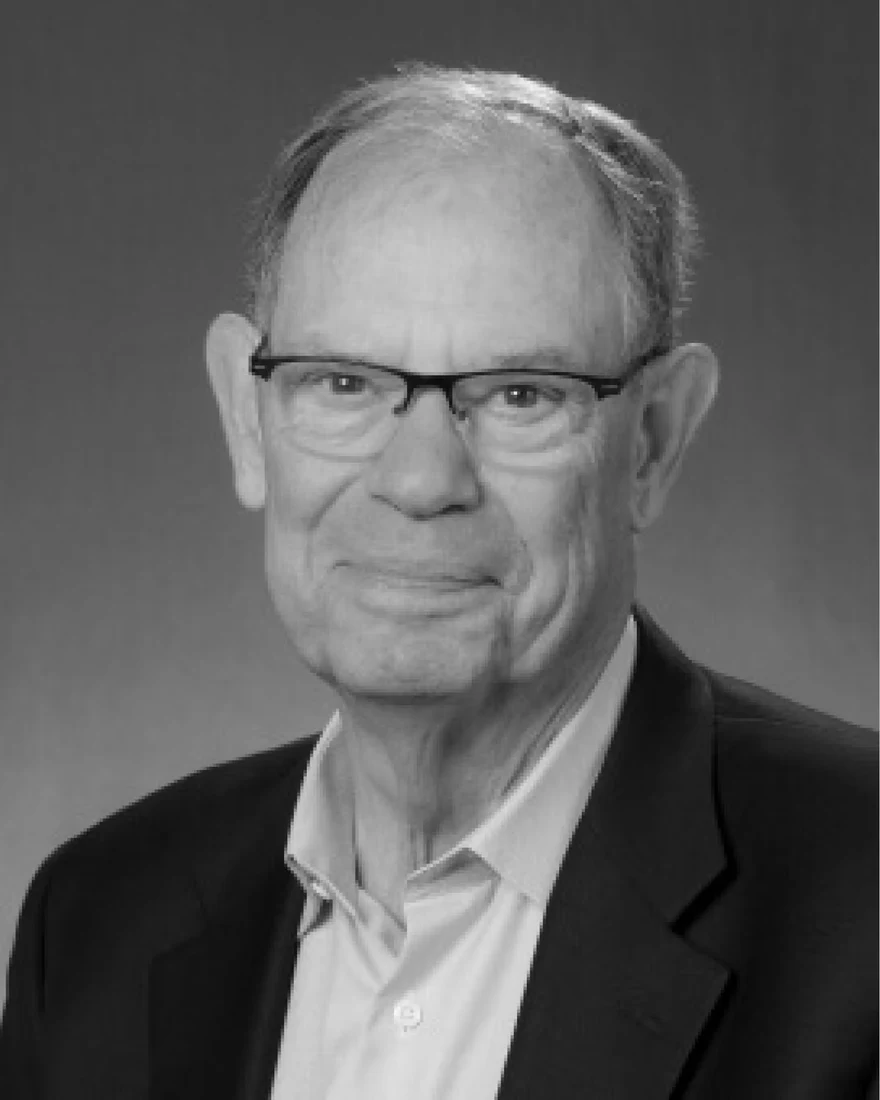
Phil Condit
Former Chairman & CEO, Boeing. Led development of the 777.
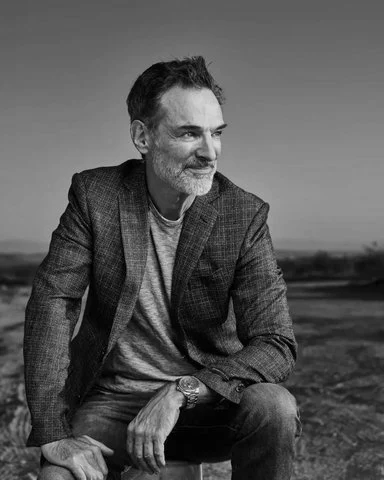
Tom Mueller
Founder/CEO, Impulse Space. Co-Founder, SpaceX — designed the engines that reached orbit.
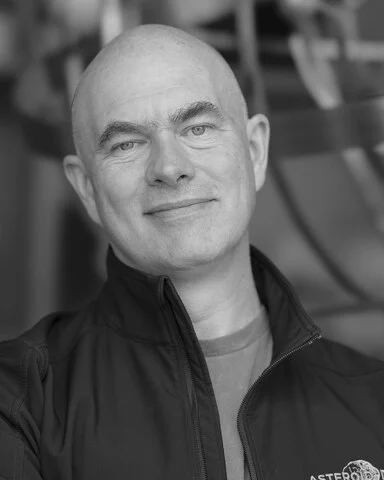
Scott Manley
Astrophysicist and spaceflight science communicator — asteroid 33434 Scottmanley is named for his work.
The prize $800K
One prize, awarded once, to the first verified qualifying attempt. Sponsored by Boom Supersonic, Alex Gerko, Electric Capital, Caffeinated Capital, Balaji Srinivasan, Josh Buckley, and Denver Ventures — and the purse may grow further as more sponsors join.
- Cash
- $750K
- Paid within 60 days of verification, split among the team however you direct. Sponsored by Boom Supersonic, Alex Gerko, Electric Capital, Caffeinated Capital, Balaji Srinivasan, Josh Buckley, and Denver Ventures.
- Boom stock
- $50K
- $50,000 of Boom stock at the time of issuance, at a valuation determined by Boom, issued to your team's designee — whoever builds the first supersonic RC airplane knows things we want to know. The winner may need to execute agreements to comply with securities law.
- Your IP stays yours
- ∞
- Teams retain all intellectual property in their designs. Boom gets the right to tell the story — names, footage, and the flight data that proves it happened.
Put your team
on the board.
Free. Register before your first attempt. When you're ready to prove it, email prize@
Questions we expect
Is this even possible?
Nobody has done it — that's the point. Amateurs have already pushed small airframes deep into the transonic regime, so the raw materials exist. The rest — thrust through the drag rise, flutter, control at 340 m/s — is the engineering problem the prize exists to solve.
How is Mach 1 actually measured?
Mach number is true airspeed relative to the local speed of sound, which depends on air temperature — not a fixed 761 mph. Verification uses calibrated onboard pitot-static and total-air-temperature instrumentation with documented transonic position-error calibration, sealed data loggers, GPS telemetry on reciprocal-heading runs, and ground atmospheric measurement. Because transonic airspeed measurement is hard, the published Protocol requires a margin (nominally indicated Mach ≥ 1.02) so instrument uncertainty can never decide the prize.
Isn't a 55 lb Mach 1 drone basically a missile?
No — and the rules are built to keep it that way. A qualifying aircraft must take off, fly, land intact, and fly again: the opposite of an expendable munition. There is no autonomous requirement — a human pilot commands every flight. Applying an entry to weapons development or marketing is immediately disqualifying, and entry is limited to U.S. persons. This is an aeronautical engineering challenge in the century-old tradition of the Orteig and Kremer prizes.
Where and when can I attempt it?
When your team is ready, notify Boom and we'll coordinate a mutually agreeable date and venue so the judges can witness both flights. Where and how you develop, test, and fly is entirely up to you — and entirely your responsibility: you are fully and solely responsible for the safety and legality of your operations.
Why the two-flights-in-one-day rule?
For the same reason the Ansari XPRIZE required two spaceflights in two weeks: it separates airplanes from stunts. One-way sprints prove a projectile. Landing and doing it again proves a reusable, controllable supersonic aircraft.
Can I form an LLC to compete?
No. Entries come from individuals and teams of individuals, not companies, so a corporation or LLC is not an eligible entrant.
I work in aerospace. Can I compete?
Yes — on your own time, your own dime, with your own resources. Your project can't use employer funding, facilities, hardware, or proprietary information, and can't be undertaken in the course of your employment or under contract to anyone. Build it in your garage like everyone else.
I work in aerospace. Can my employer fabricate parts for my entry?
You may compete on your own time and with your own resources, without employer funding, facilities, hardware, or proprietary information (Section 2.5). Your employer may fabricate discrete components to your own original drawings under Section 2.4, as long as those outsourced parts are contracted under ordinary market terms and do not add up to the majority of the airframe.
Can we add team members after registering, and is there a deadline?
Yes. Email prize@boomsupersonic.com with the new member's details and we will update your registration; no documentation is required at that point. There is no deadline, as long as the person materially contributes to the build. Adding a member does not change the majority-built-by-the-team requirement, which always applies to the team as a whole.
Does “fixed-wing” rule out variable-sweep wings or high-lift devices?
No. “Fixed-wing” means the aircraft derives lift from aerodynamic surfaces rather than from a rotor. Variable-geometry designs such as swept or variable-sweep wings, flaps, and other high-lift devices are permitted, as long as every component stays attached to the aircraft throughout both flights.
What fuel can the engine use?
Combustion engines must run on liquid fuel only, except that gaseous hydrogen is also permitted. Solid propellants are not permitted. Nitromethane is an allowed liquid fuel. The aircraft may carry no onboard oxidizer.
Can the engine run on hydrogen gas?
Yes. Hydrogen is permitted as a fuel, as long as it powers an air-breathing engine such as a turbojet, turbofan, or ramjet following Section 3.2.
Can we use university club funds?
No. Club budgets are considered institutional money regardless of how they reach the team, whether through student activity fees, a department account, a university foundation, or a faculty research line.
Can we fund the project with a grant from our university or another institution?
No. Under Section 2.2, grants or sponsorship from any corporation, institutional investor, or government program are not permitted. Personal funds and donations from private individuals, including crowdfunding, are the permitted routes.
If I ask my school or a local company for a donation of parts or funds, is that allowed?
Money or in-kind support from a company, institution, or government program is outside funding and is not allowed, whether it takes the form of cash or parts. You may still purchase commercial hardware on ordinary market terms.
Can we borrow an engine from a manufacturer for the project?
No. A manufacturer lending or donating an engine for your entry is not in keeping with the amateur spirit of the prize.
Do free services or materials count as sponsorship?
No, not on their own. Donated services or materials are fine, as long as the provider receives no equity, intellectual property, or control, and is not advertised or promoted in connection with your entry during the contest. Promoting a business through your entry does count as sponsorship.
Can we use university equipment, and get advice from professors?
Current students may use university resources such as 3D printers, CNC machines, and workshop tools, provided the team does all of its own design and fabrication. Informal advice or technical guidance from professors is allowed.
How much of the aircraft can we outsource, and is sending a part to a machine shop a breach?
It's fine to use shops or services like SendCutSend to build components. However, most of the build must be yours — the team carries the burden of demonstrating to judges that at least 51% of the work was completed with amateur effort.
Can we partner with a university or other organization for regulatory compliance, such as export control or airspace, without it counting as sponsorship?
Yes. A partnership limited to regulatory compliance, such as export-control or airspace authorization, is not sponsorship and does not affect eligibility.
Can I dive to accelerate before the level-flight requirement begins?
Perfect altitude hold is not expected or required. However, a dive whose sole purpose is to gain speed, at any point in the flight, is against the spirit of the competition and may be disqualifying at the discretion of the judges. Your acceleration to supersonic must come from thrust in level or climbing flight, per Section 3.4.
What are the weather, wind, and course requirements for an attempt?
There is no fixed weather or wind limit and no required course or corridor layout. Your team sets these to fly the attempt safely and to meet the requirements in Section 3, including the reciprocal-heading runs. You are solely responsible for the safety and legality of the operation.
What's the stock worth?
$50,000 at the time of issuance, at a valuation determined by Boom in its sole discretion. Boom is a private company: the stock is illiquid, may never become liquid, and may change in value. The winner may need to execute agreements in order to comply with securities law.
Can the rules change?
Yes. Boom may amend the rules or suspend or cancel the prize at its sole discretion — a standard feature of prizes in fast-moving regulatory environments. Material changes are published to registered teams with notice, and no change retroactively invalidates a verified qualifying attempt. The purse may also grow as cosponsors join.
Terms
& Conditions.
The complete official rules. The Measurement & Verification Protocol, published alongside these rules, is incorporated by reference.
1. The Challenge & Term
The Prize is sponsored by Boom Technology, Inc. d/b/a Boom Supersonic ("Boom"), together with prize cosponsors Alex Gerko, Electric Capital, Caffeinated Capital, Balaji Srinivasan, Josh Buckley, and Denver Ventures. No purchase or payment necessary to enter. Void where prohibited. This is a contest of skill.
The Prize will be awarded to the first Eligible Team to complete a Qualifying Attempt verified by the Judging Panel. The Prize opens on the date of announcement and remains open until awarded or until December 31, 2030, whichever comes first. Boom may extend the term at its sole discretion. The prize amount may be increased as additional cosponsors join; the amount in effect at the time of a verified Qualifying Attempt applies.
2. Eligibility (“Amateur”)
2.1 Individuals and teams — Entry is open to individual people and teams of people, and every team member must be a U.S. Person (a U.S. citizen, lawful permanent resident, or person granted asylum). Minors need a parent or guardian to co-sign. Corporate or other entities are not eligible entrants.
2.2 No corporate money — Neither the team nor any campaign entity may have received equity investment, SAFEs, convertible notes, grants, or sponsorship from any venture capital firm, corporation, institutional investor, or government program. Team members' personal funds are permitted, and so are donations from private individuals — including crowdfunding — provided donors receive no equity, intellectual property, or control in return. Boom may request reasonable supporting documentation regarding funding, and material misrepresentation is disqualifying.
2.3 Active builders only — Every team member must materially contribute to the design, fabrication, or operation of the aircraft. Purely financial participants are prohibited and their funds are treated as outside investment under 2.2.
2.4 Amateur-built — The majority of the fabrication and assembly of the airframe must have been performed by team members themselves, for education or recreation, in the spirit of 14 CFR 21.191(g), as reasonably evidenced by the team (build logs, photos, receipts, or similar records hobbyists ordinarily keep). Commercially purchased engines, servos, avionics, and standard hardware are permitted and excluded from the calculation. Complete or substantially complete commercial airframes, kits, or derivatives of existing target drones or missiles are prohibited. Commercial fabrication assistance is limited to discrete components made to the team's original drawings.
2.5 Professional participation — Aerospace professionals may compete on their own time, with their own resources, and without employer funding, facilities, hardware, or proprietary information. The project may not be undertaken in the course of any member's employment or under contract to any third party.
2.6 Excluded persons — Current employees, officers, directors, and contractors of Boom or any prize cosponsor, members of the Judging Panel, and the immediate family and household members of any of them, are not eligible. Persons on any U.S. restricted-party list are not eligible. Boom may exclude any entrant whose participation would create, in Boom's sole discretion, a real or apparent conflict of interest or whose entry violates the amateur spirit of the Prize.
2.7 Registration — Teams must register with Boom (free) before attempting, using the Team Registration Form, identifying all team members and designating a single Team Lead.
3. Qualifying Attempt
A Qualifying Attempt consists of two Qualifying Flights by the same aircraft, completed between local sunrise and sunset of a single calendar day, witnessed in person by the Judging Panel or its designated observers.
3.1 Aircraft — A fixed-wing airplane, maximum takeoff weight 25 kg (55 lb) inclusive of fuel and landing gear, deriving lift primarily from aerodynamic surfaces, which takes off, flies, and comes to a stop under its own control and power on the ground. Expendable or projectile-like vehicles do not qualify: the same airframe must complete both flights and both landings. The only mass the aircraft may shed in flight is fuel. No wings, structure, or any other component may be jettisoned, dropped, or separated at any point.
3.2 Propulsion — Air-breathing propulsion only: turbojet, turbofan, ramjet, pulsejet, or electric ducted fan, in any combination (an air-breathing engine may boost a ramjet to operating speed). No rocket or other non-air-breathing thrust at any point in flight; onboard oxidizer is prohibited, as is thrust from stored high-pressure gas or steam injection.
3.3 Control — The aircraft must be operated by a remote human pilot in real time. Stability augmentation, autopilot functions, and pre-programmed flight profiles are permitted, but a human operator must retain continuous command authority and immediate abort capability throughout each flight.
3.4 Supersonic segment — level or climbing acceleration required — During each Qualifying Flight the aircraft must accelerate through the transonic regime and past Mach 1 under its own thrust, in level or climbing flight, achieving a true Mach number of at least 1.0 sustained continuously for at least 5 seconds. Specifically, for the entire Transonic Acceleration Phase — from the moment the aircraft first exceeds Mach 0.8 until the end of the supersonic segment — barometric altitude (a) may never fall more than 10 m below the highest altitude reached since the phase began (turbulence tolerance), and (b) must show no net loss over the phase. Any descent used to gain or maintain speed anywhere in this phase disqualifies the run: dive or zoom-and-push-over acceleration does not pass the test. Climbing throughout is permitted and welcome.
3.5 Reciprocal headings — The supersonic segments of the two Qualifying Flights must be flown on reciprocal headings (180° ± 10°). Onboard air data is the primary Mach measurement; the reciprocal GPS ground-speed runs corroborate it and bound wind effects.
3.6 Landing and reflight — After the first Qualifying Flight the aircraft must make a controlled landing appropriate to its design (wheeled or belly, on the designated landing area) and be returned to flight the same day. Between flights, teams may refuel, recharge, and make minor repairs, but may not replace major components — defined as: wing or primary wing structure, fuselage primary structure, empennage primary structure, engine, or flight-control computer. The Judging Panel inspects the aircraft between flights.
3.7 Measurement & Verification — Mach number must be demonstrated to exceed 1.0 net of any measurement uncertainty. Entrants may use calibrated pitot-static/air data or GPS/GNSS telemetry augmented with atmospheric data to infer Mach number. Raw data must be provided to the Panel after each flight attempt along with supporting analysis to show that supersonic flight was achieved net of reasonable margin of uncertainty.
3.8 Attempt notice and approval — When your team is ready to demonstrate the feat, notify Boom at prize@boomsupersonic.com. Boom and the team will coordinate a mutually agreeable date and venue with at least 30 days' lead time so the Judging Panel or its observers can attend. Before a Qualifying Attempt is approved, the team must demonstrate that it has complied with all applicable regulations and is taking due care for the safety of personnel and the range. Boom reserves the right to require releases, waivers, and indemnification agreements from all participants prior to approving a Qualifying Attempt. Attempts not witnessed by the Panel or its designated observers cannot qualify.
4. The Prize
4.1 Cash — $750,000 (USD), paid to the Team Lead or allocated among team members as the team directs in writing, within 60 days of verification, subject to W-9 collection and IRS Form 1099 reporting. All taxes are the winners' responsibility.
4.2 Stock — In addition, $50,000 of Boom Technology, Inc. stock, valued at the time of issuance at a valuation determined by Boom in its sole discretion, issued to one natural person designated by the team. The winner may be required to execute agreements — including advisory, award, or securities documentation — as necessary to comply with applicable securities laws. Equity in a private company is illiquid, may never become liquid, and may change in value. Nothing in these rules or in any Prize publicity is an offer to sell or a solicitation of an offer to buy securities.
4.3 One prize — The Prize is awarded once, to the first verified Qualifying Attempt. If two attempts are verified on the same calendar day, the attempt whose second landing occurred first (UTC) wins.
5. Judging
5.1 The Judging Panel is appointed by Boom and includes independent experts in aerospace, propulsion, and flight measurement. The founding panel: Phil Condit (former Chairman & CEO, Boeing), Tom Mueller (Founder/CEO, Impulse Space; Co-Founder, SpaceX), and Scott Manley (astrophysicist and spaceflight science communicator).
5.2 The Panel verifies eligibility, aircraft conformity, and performance data per the Measurement & Verification Protocol. All decisions of the Judging Panel and Boom are final and binding.
5.3 The Prize is a contest of skill; no element of chance determines the winner.
6. IP, Publicity & Data
6.1 Entrants retain all intellectual property in their designs.
6.2 Entrants grant Boom and the cosponsors a perpetual, royalty-free license to use their names, likenesses, team name, and imagery/footage of registered attempts for publicity and educational purposes.
6.3 Verification data may be published by Boom after award, subject to Boom's standard legal review; teams may request confidential treatment of proprietary design details.
7. Responsibility, Liability & Conduct
7.1 Entrants are fully and solely responsible for the safety of their operations and for compliance with all laws and regulations applicable to their activities. Nothing in these rules is legal advice or an authorization of any kind.
7.2 Entrants participate at their own risk. High-speed model flight is inherently dangerous. To the maximum extent permitted by law, entrants (and, for minors, their parents or legal guardians) assume all risk of injury, death, and property damage, and release, indemnify, and hold harmless Boom, the prize cosponsors, the judges, and their respective officers, employees, and agents from all claims arising from participation.
7.3 Boom will disqualify any team that conducts an unsafe or unlawful flight, misrepresents eligibility, funding, or data, or applies its entry to weapons or weapons-related development or marketing.
8. Reservation of Rights
8.1 Boom may amend these rules at any time, including the technical criteria, eligibility requirements, and prize structure. Material changes will be published to registered teams with reasonable notice and will not retroactively invalidate a previously verified Qualifying Attempt.
8.2 Boom may suspend, extend, or cancel the Prize at any time, for any reason, at its sole discretion. No entrant acquires any right to the Prize, or any claim against Boom or any cosponsor for expenses incurred, unless and until Boom verifies a Qualifying Attempt and confirms the award in writing.
8.3 Governing law: Colorado. Exclusive venue: state and federal courts in Denver, Colorado.
8.4 If any provision is unenforceable, the remainder stands. These rules plus the published Measurement & Verification Protocol constitute the complete rules.