Aviation’s Firsts: From Kitty Hawk to Mojave and Biplanes to Supersonic
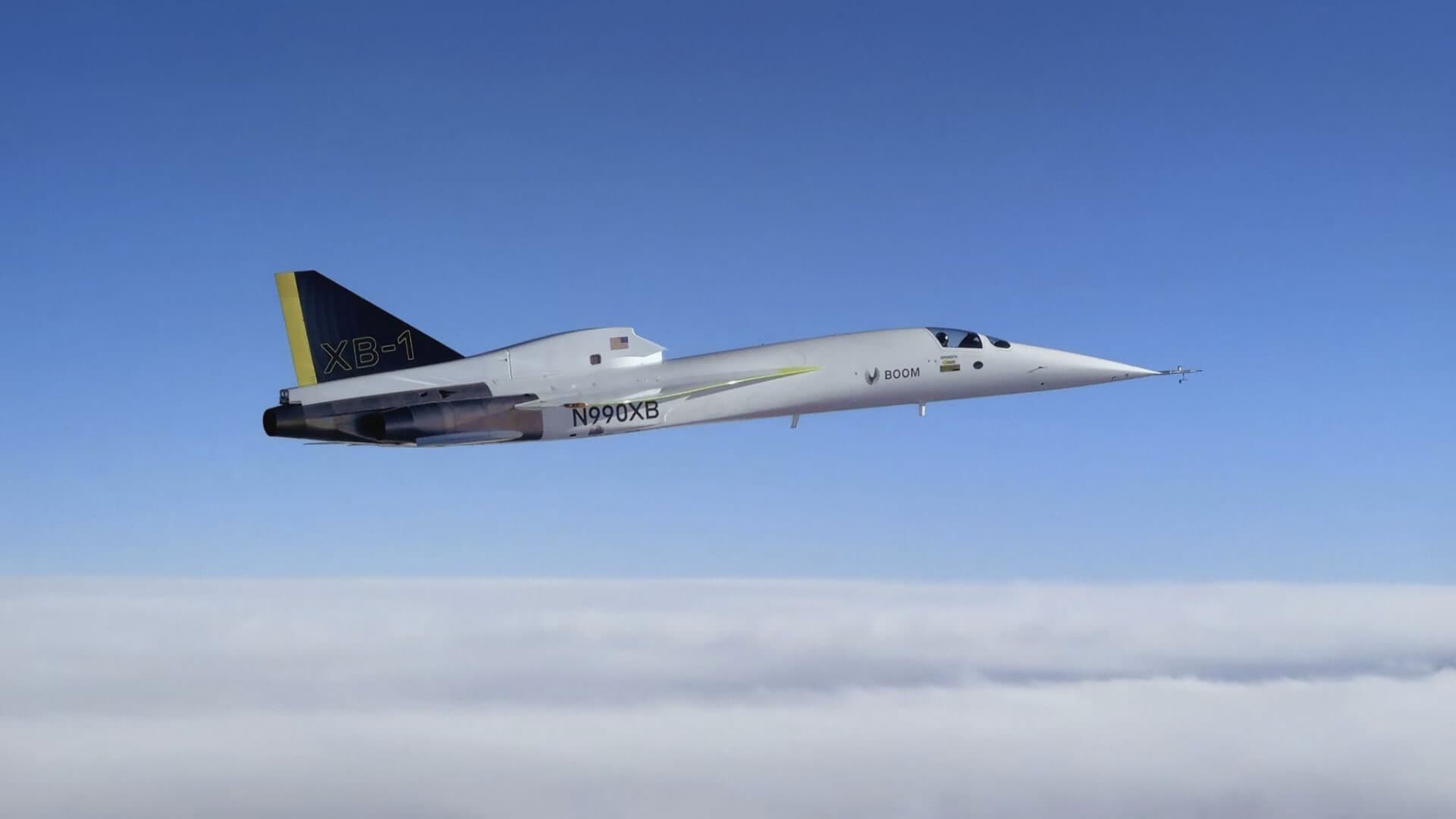
Every aviation milestone—whether it’s a “first flight” or technological advancement—rewrites the limits of what humans can do. It’s not just an airplane leaving the ground; it’s a moment when what was once considered impossible becomes possible. From the Wright Brothers’ first flight at Kitty Hawk in 1903 to Boom Supersonic’s XB-1 breaking the sound barrier in 2025, each milestone pushes humanity to explore the next frontier.
Today, the next generation of “firsts” are being built in Colorado. XB-1 has already delivered a supersonic breakthrough. Symphony, the engine that will power Boom’s commercial supersonic airliner, Overture, is making rapid progress as it moves through build and testing.
The recent lift of outdated U.S. supersonic restrictions has helped clear the path for the return of commercial supersonic travel, shifting it from a long-term ambition to an achievable, near-term reality.
The stage is set for the next major milestone: Symphony’s first full fire.
In celebration of Wright Brothers Day this December 17, there’s no better moment to look back at the breakthroughs that got us here, the ones about to take off, and maybe most notably, the people who have attempted to push what’s possible to shape aviation into what it is.
The People Behind the Firsts
Every inflection point in aerospace started with someone willing to step into the unknown, starting with the Wright Brothers, and their historical first we celebrate today. Each milestone demanded the same qualities: experimentation, grit, and a willingness to trust (and prove, or disprove) the math.
Two bicycle mechanics from Ohio (where our own founder and CEO Blake Scholl hails from!) changed human mobility forever at Kitty Hawk in 1903. Their first powered flight lasted 12 seconds and covered just 120 feet, but it was the first time in history an aircraft achieved powered, sustained, and controlled flight. That last word—controlled—is what made the breakthrough historic. Their three-axis control system (roll, pitch, yaw) is still the foundation of every airplane flying today. The Wrights didn’t just get off the ground; they solved the core engineering problem of flight.
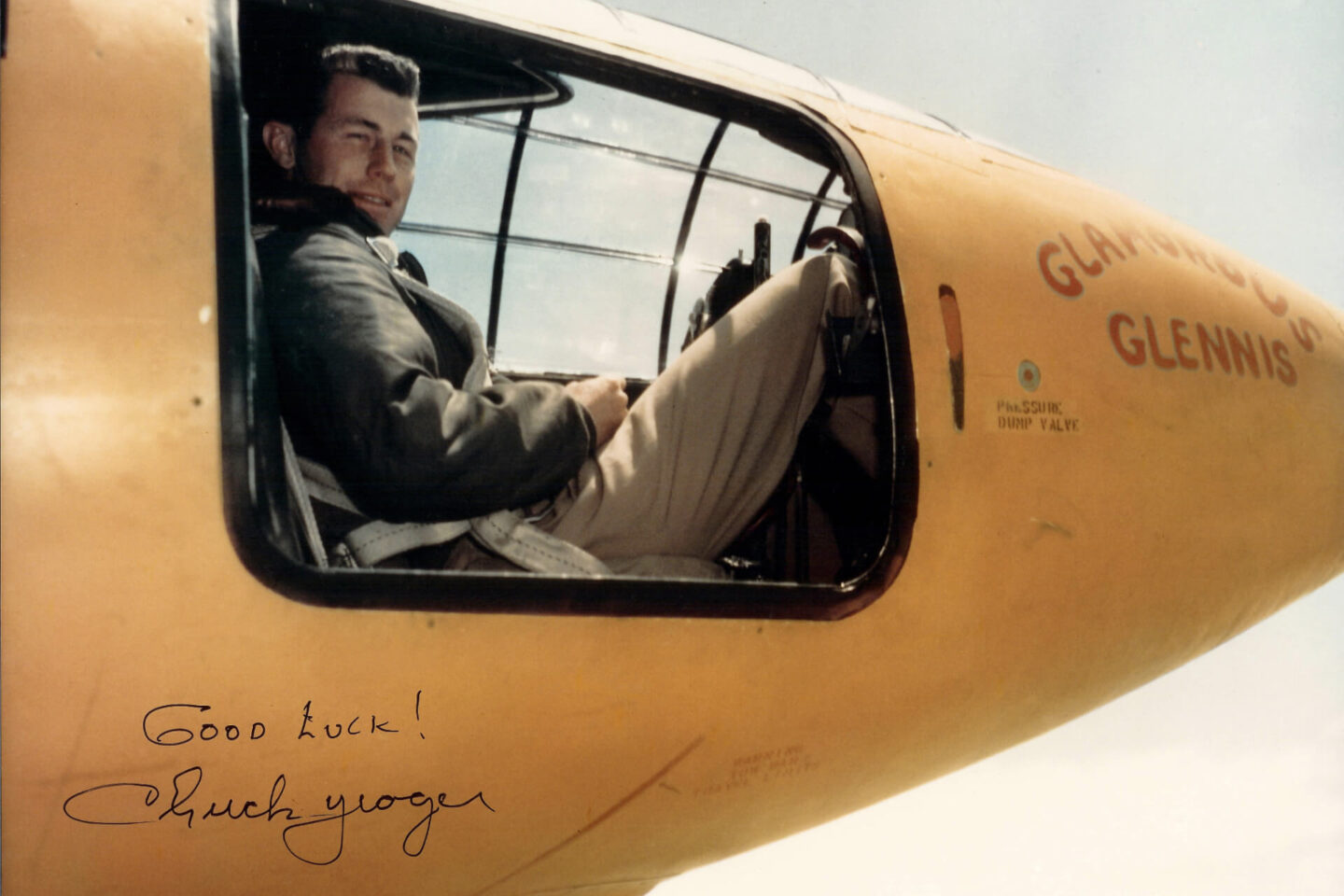
In 1947, Chuck Yeager flew the Bell X-1, a bullet-shaped, rocket-powered aircraft that would make him the first human to break the sound barrier (and the origin/namesake of our own XB-1!). Yeager was flying with broken ribs—he’d been injured in a horseback accident but kept it quiet so he wouldn’t get grounded. When the X-1 passed Mach 1.06 at 45,000 feet, the violent buffeting that pilots feared didn’t occur. His flight proved that shock waves and compressibility didn’t make supersonic flight impossible…just misunderstood. Overnight, Yeager moved the world from “subsonic” to “supersonic,” replacing myths with data.
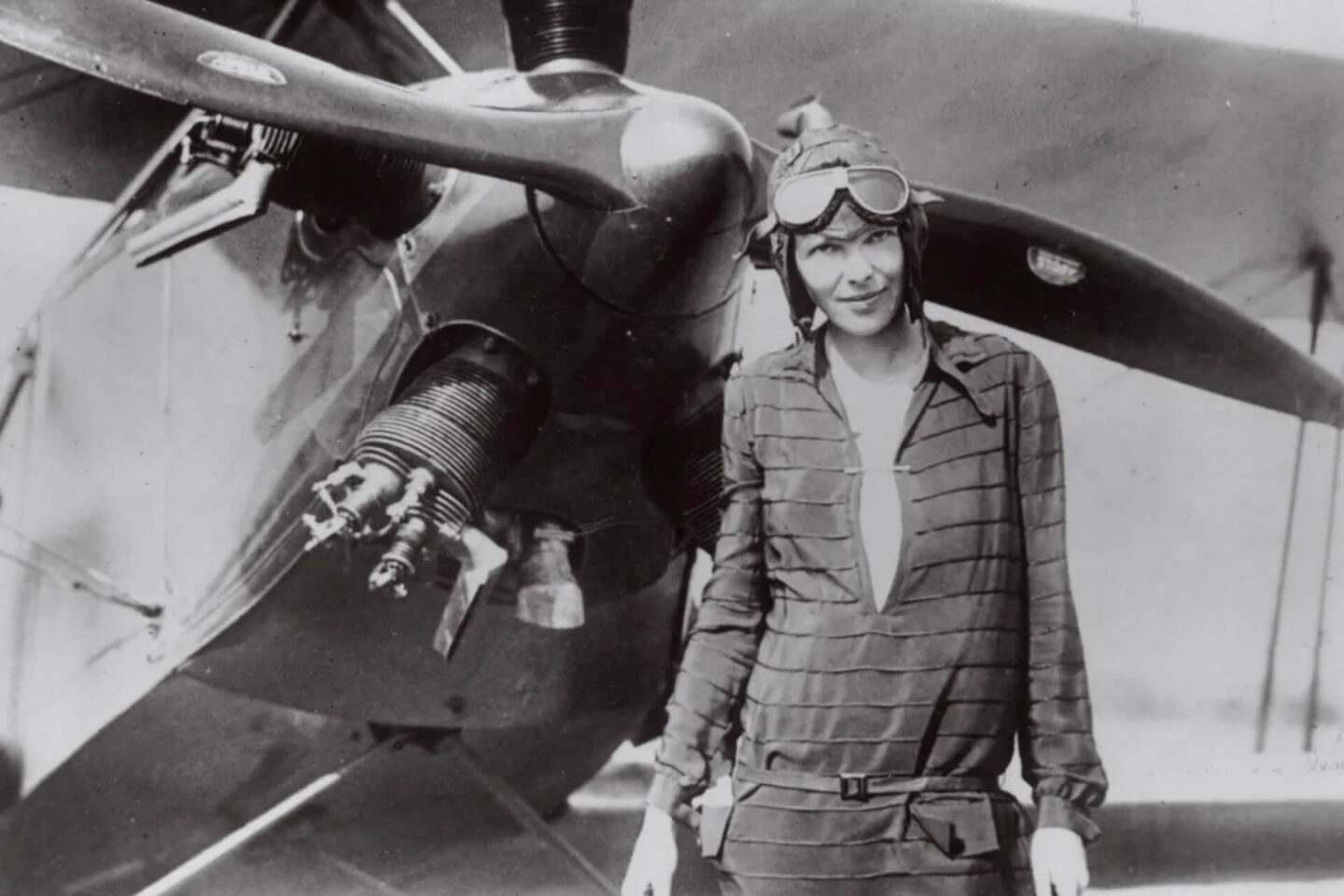
One of the most notable, memorable women in aviation history was Amelia Earhart. In 1932, she became the first woman to fly solo across the Atlantic, departing Newfoundland in a Lockheed Vega and landing in a pasture in Northern Ireland nearly 15 hours later. Her flight was filled with real danger: ice on the wings, a failed altimeter, and a cracked exhaust that filled the cockpit with fumes, making Earhart’s accomplishment not only symbolic, but technically and physically grueling. She demonstrated that long-distance flight required judgment and endurance as much as engineering. Earhart reshaped global perspectives of who can lead in exploration while inspiring a generation by proving what women could achieve in aviation.
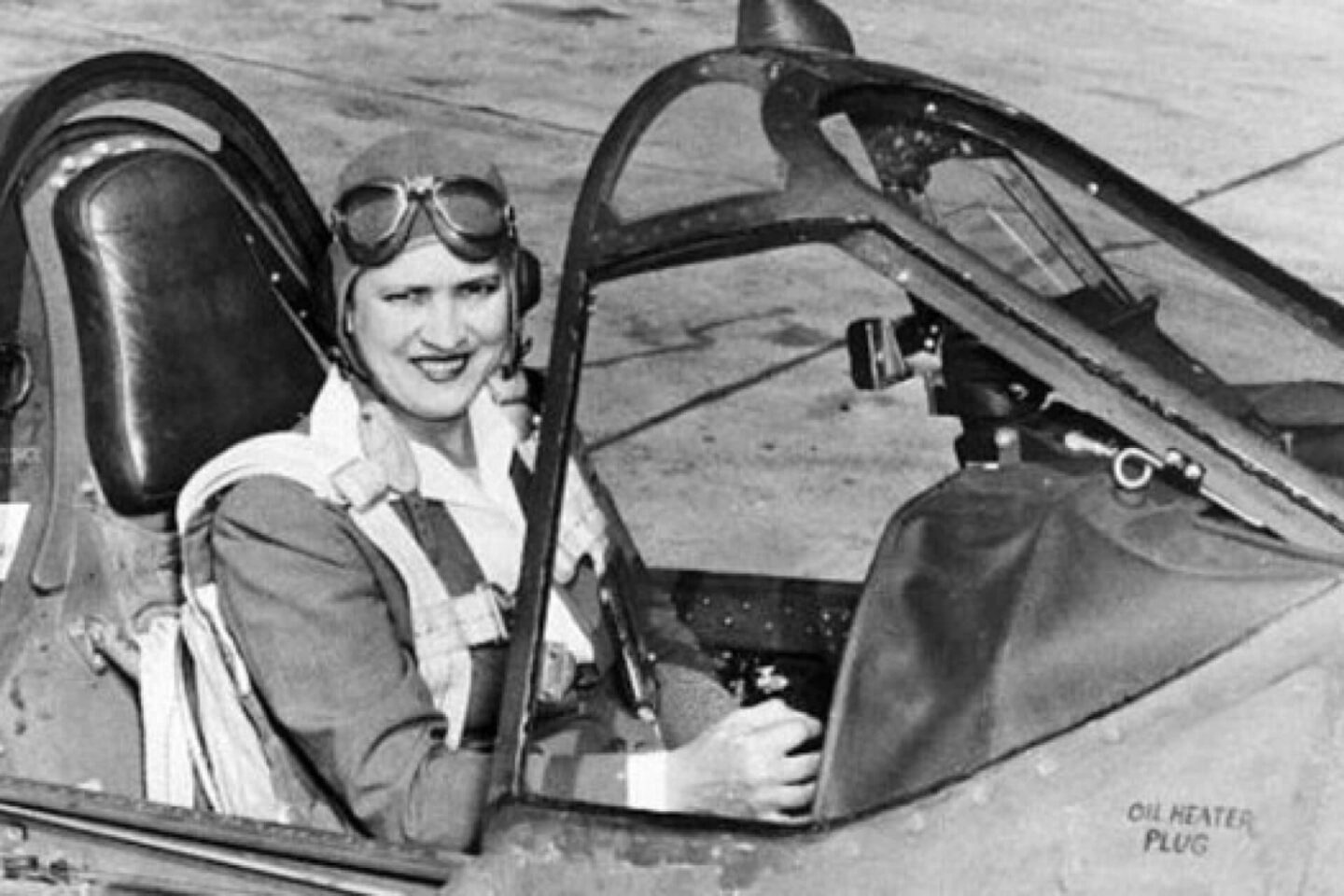
Jacqueline Cochran was a test pilot, record-setter, and the first woman to break the sound barrier when she flew an F-86 Sabre past Mach 1 in 1953. Cochran held more speed, altitude, and distance records than any pilot of her generation, male or female. Breaking the sound barrier placed her in the elite lineage of early supersonic pioneers, and she documented every detail for engineers and pilots who followed. Her career demonstrated that pushing aerospace forward wasn’t just about singular moments, but about building a body of data, discipline, and operational understanding that shaped the jet age.
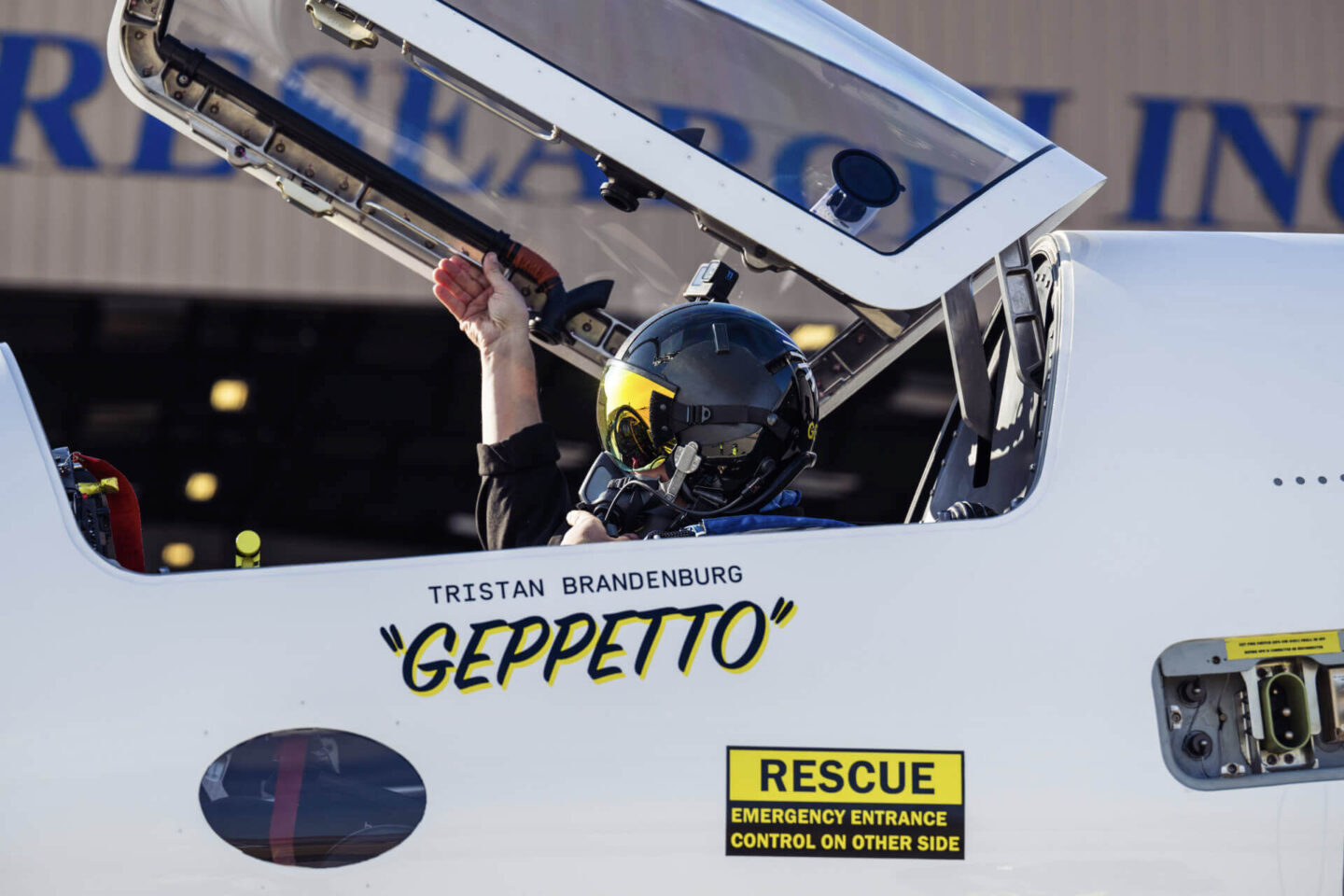
Jumping ahead to 2025, we honor our own Tristan “Geppetto” Brandenburg, the chief test pilot of XB-1, who broke the sound barrier six times in the world’s first independently developed supersonic airliner—and with no audible sonic boom. His test flights validated Boomless Cruise in flight, paving the way for quiet supersonic flight over land. In doing so, Geppetto made aviation history, shaping the next chapter of aviation firsts.
This past October, The Society of Experimental Test Pilots awarded Geppetto the prestigious Iven C. Kincheloe Award at its annual symposium and banquet. The Kincheloe Award recognizes outstanding professional accomplishment in the conduct of flight testing, and marked the second year in a row that a Boom employee brought home this top honor. In November, Geppetto was also recognized by the National Aeronautic Association (NAA) for excellence in aviation and aerospace at its 2025 Fall Awards. The NAA event brought together aviation leaders, pilots, and industry professionals to recognize outstanding achievements across humanitarian aviation, aerospace education, and military aviation excellence.
Today, Geppetto is living proof that the same spirit that carried a wooden glider into the air is alive and well—and fueling today’s supersonic resurgence.
The Innovations Behind Aviation’s Biggest Firsts
Aviation history isn’t just about the pilots—it’s about the machines that made it possible, turning ambition into reality.
The Wright Flyer was a fragile-looking combination of wood and canvas, but inside it carried the world’s first serious experimentation with aerodynamics and controlled flight. The aircraft’s 12-horsepower engine drove a pair of propellers designed by the Wrights themselves, and the Flyer’s three-axis control system allowed pitch, roll, and yaw to be managed independently. It was the blueprint for modern aviation: every airplane flying today still uses the fundamental principles first proven on that windy North Carolina sand dune.
Invented by Sir Frank Whittle in the 1930s and operational by the 1940s, the jet engine transformed aviation. By compressing air, mixing it with fuel, and igniting it to produce continuous thrust, Whittle’s design enabled sustained high-speed, high-altitude flight that piston engines could never reach. This single innovation shifted aviation from a regional novelty into a global transportation network. Passenger jets could now cross oceans in hours rather than days, and militaries gained aircraft capable of previously unimaginable speeds. Whittle’s engine didn’t just move planes faster—it redefined what flight could accomplish.
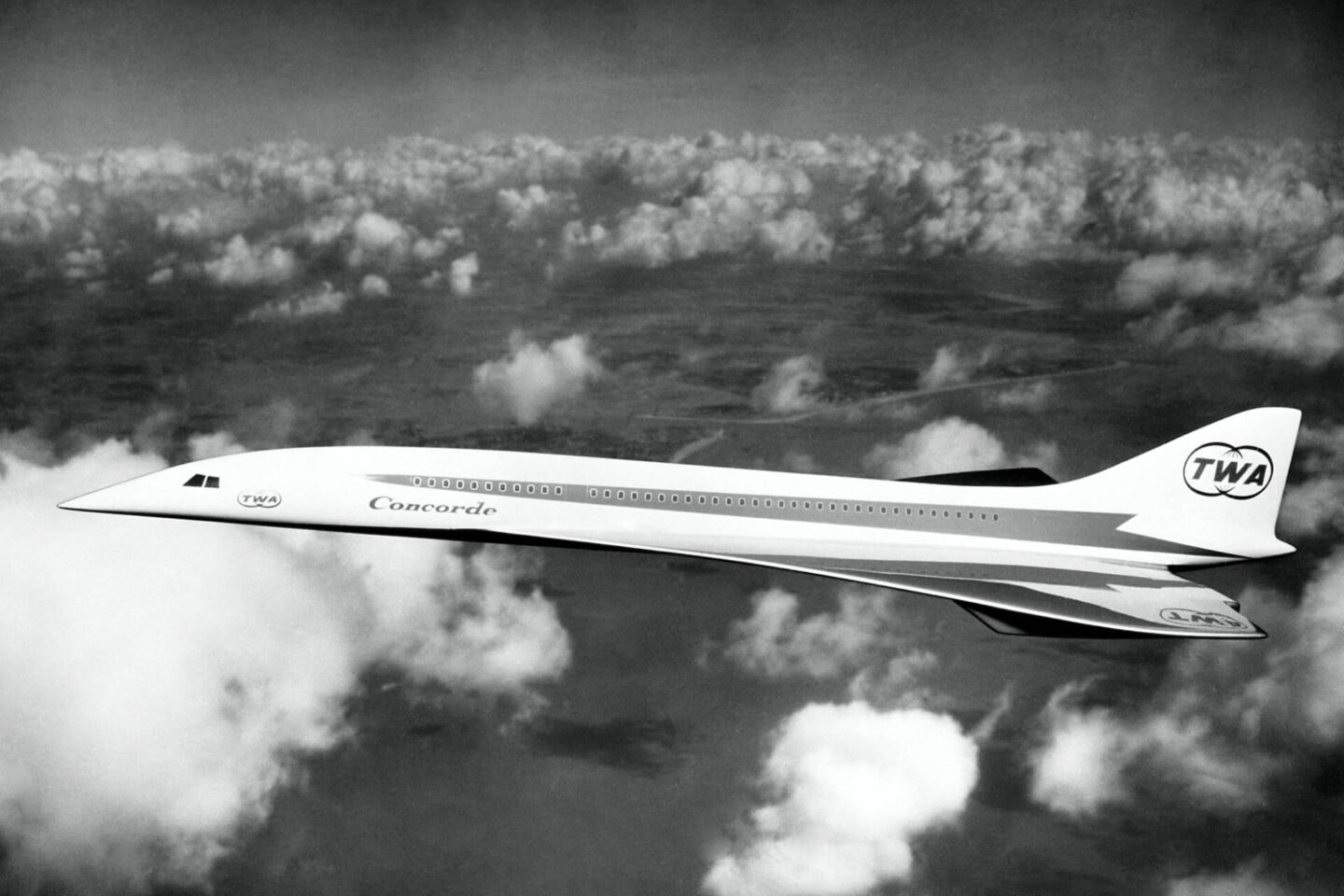
Before Boom, there was Concorde. Concorde, the first and only commercially successful supersonic airliner, proved that commercial supersonic flight was not just possible, but practical. For over 27 years, it flew more than 2.5 million passengers at Mach 2, cutting transatlantic travel times from seven hours to under four. For premium, time-sensitive routes, speed mattered—and Concorde demonstrated exactly how transformative it could be. At the same time, Concorde’s development reflected the constraints of its era: a heavily subsidized joint program between the British and French governments, optimized for a narrow set of routes and unable to evolve once economic, regulatory, and technological conditions changed.
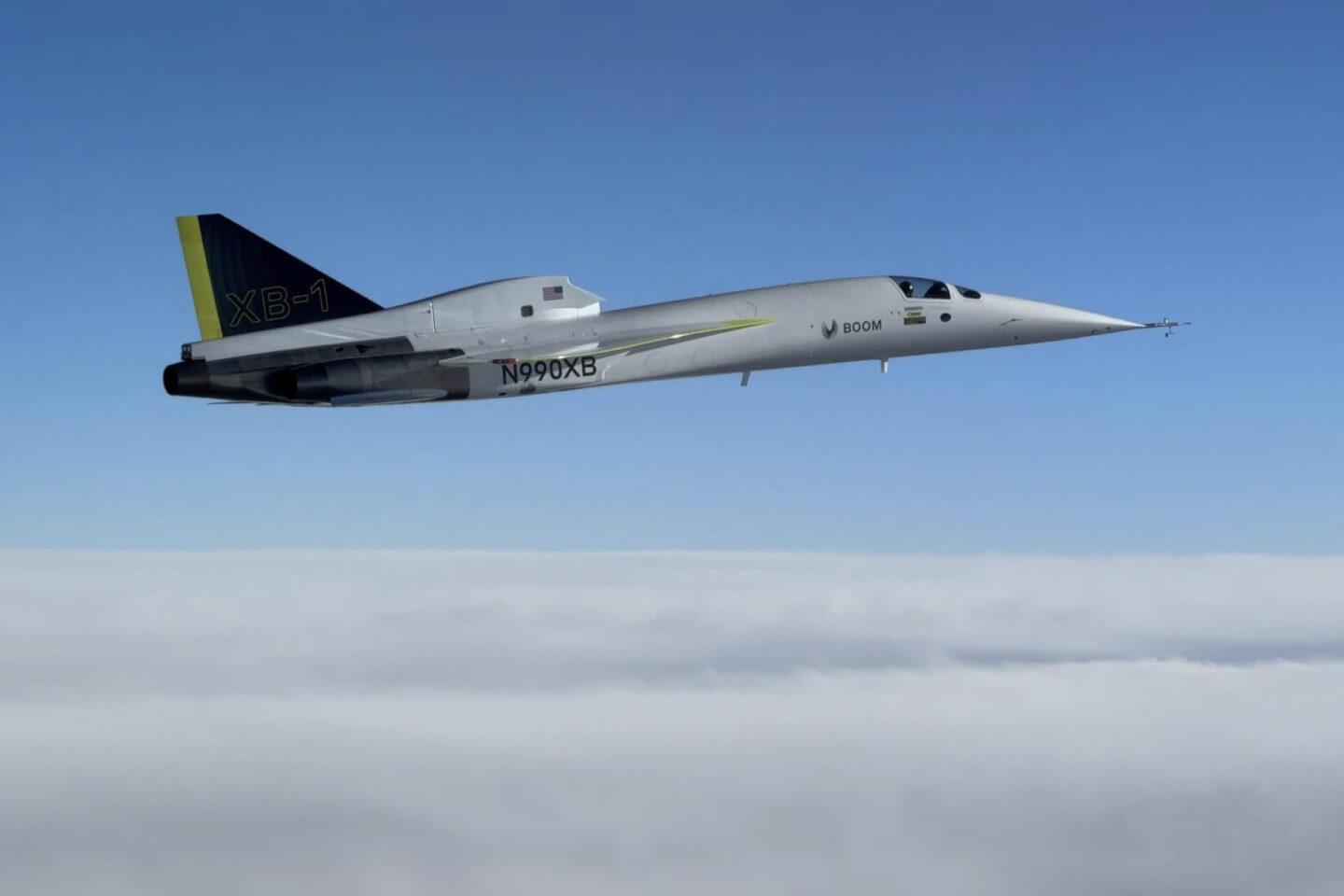
XB-1 builds directly on Concorde’s legacy, and represents a different kind of “first.” As the world’s first independently developed supersonic demonstrator, it shows what’s possible when modern aerospace tools replace Cold War–era assumptions. Designed with advanced composites, digital engineering, and rapid iteration, XB-1 has already delivered a breakthrough Concorde never achieved: real-world validation of Boomless Cruise. Across six supersonic flights over the Mojave, XB-1 produced zero audible sonic boom outside the aircraft—confirming that quieter supersonic flight is achievable beyond the wind tunnel. It’s a modern X-plane moment, and a critical proof point for the technologies and talent now moving commercial supersonic forward.
Symphony: The First Purpose-Built Commercial Supersonic Engine [in Decades]
Looking ahead, the next wave aviation “firsts” is taking shape in Colorado, and at the center of it is Symphony. Unlike most modern engines that evolve from legacy designs, Symphony is being developed vertically—from initial concept and digital design to in-house manufacturing—allowing Boom to optimize every component for speed, efficiency, and supersonic performance.
Symphony’s development is progressing quickly: The team is currently proving out core systems now, accelerating toward full first fire. As of November 2025, over 95% of first parts had been released to manufacturing, and the first in-house, vertically integrated parts have been machined. This work lays the foundation for the next phase: testing the full “sprint core” at the Colorado Air and Space Port in Watkins, where the engine will be exposed to the extreme conditions of high-speed, sustained supersonic operation.
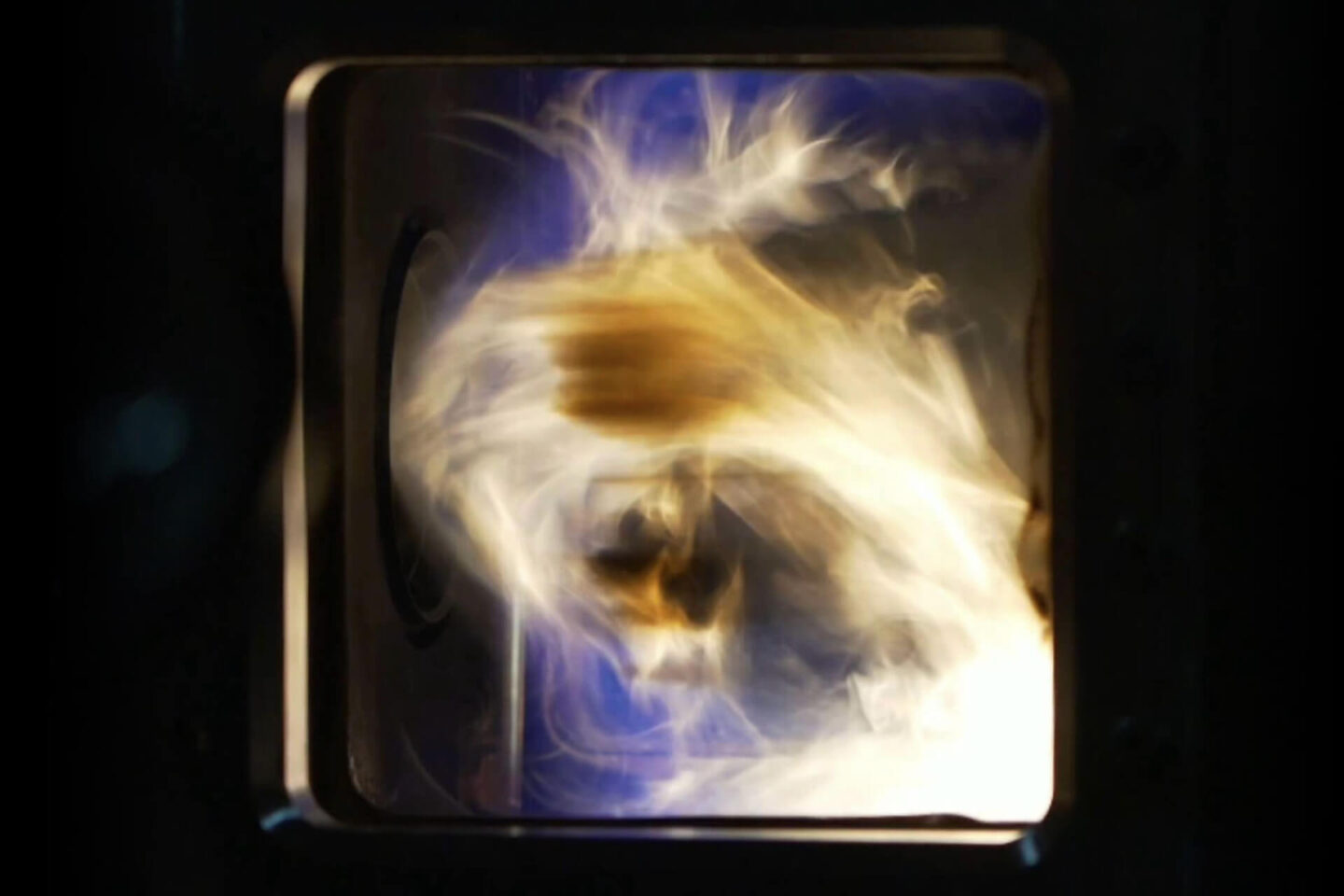
Symphony’s development represents a modern X-plane moment in propulsion: an entirely new engine architecture, tested and validated at the component level, engineered for an aircraft that will bring supersonic travel back to the skies—now efficient, reliable, and commercially viable.
The Next Frontier: A New Era of Speed
Contrary to its name, after Symphony, comes Overture. Overture is a clean-sheet supersonic airliner optimized to fly on 100% SAF at twice the speed of today’s subsonic airliners. And thanks to the physics of Mach cutoff (and validated by XB-1), supersonic overland is now achievable at scale. With outdated regulations being updated, the U.S. is positioning itself to lead this era.
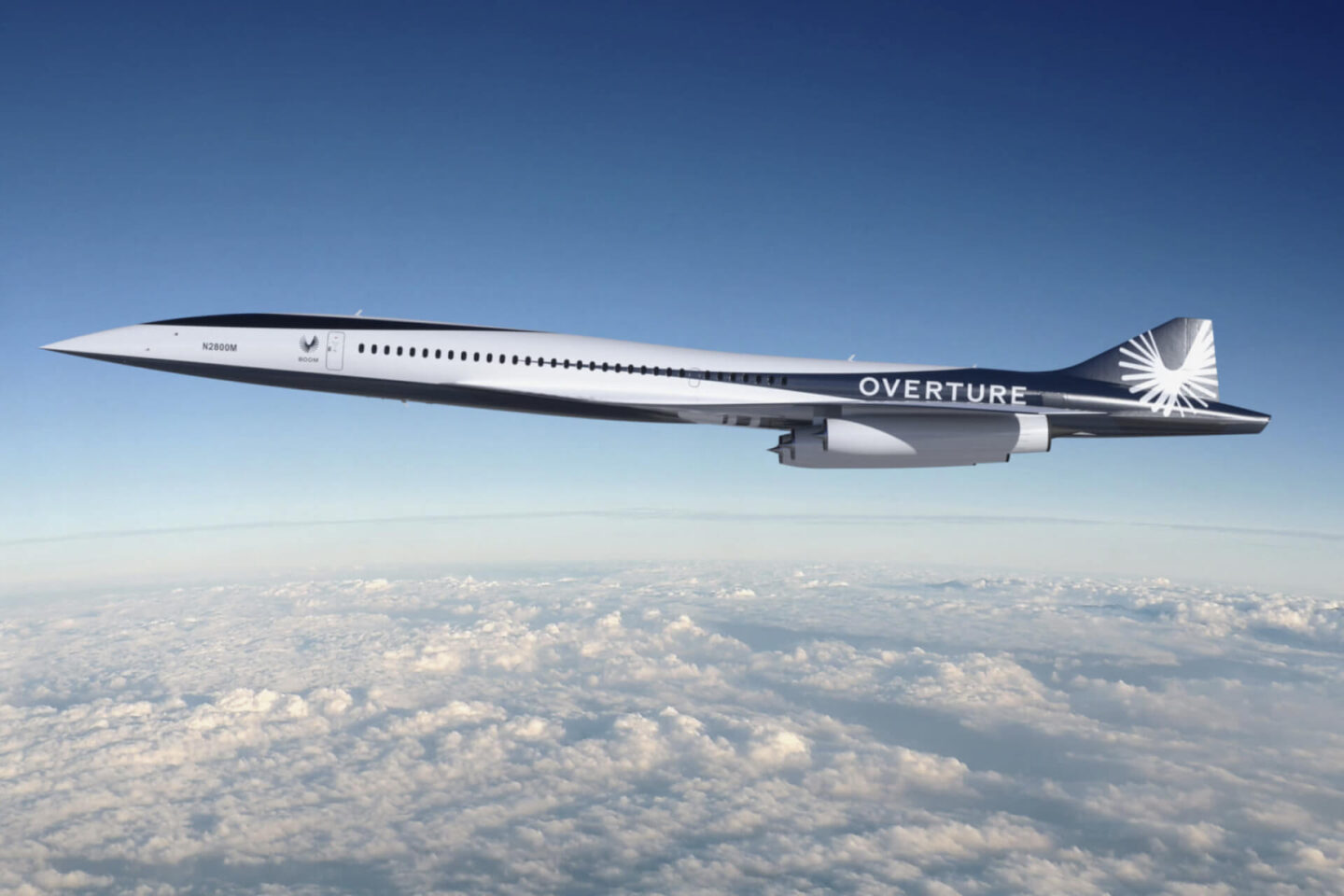
Faster global travel doesn’t just shrink the map, it expands opportunity: for business, for families, for nations. For the movement of ideas.
The first flights of the past shattered what people thought was possible. The first flights of the next decade will redefine how the world moves.
Supersonic flight is no longer a dream—it’s already happening, starting right here in Colorado with Boom. Want to be part of history? Help build the future of flight and explore open positions at Boom.